Robotics: How Are Smart Machines Changing Everyday Life?
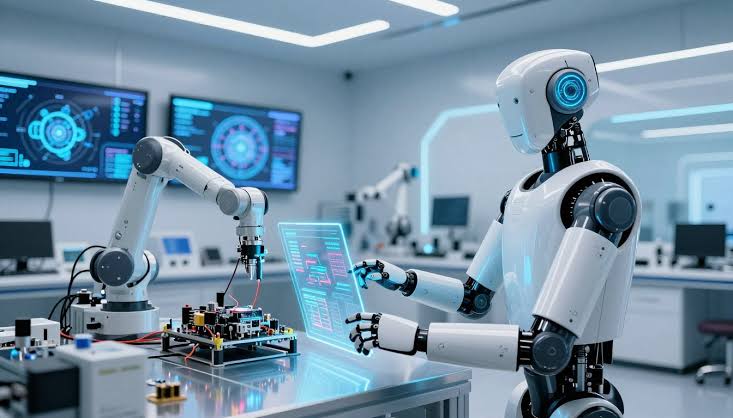
One of the fastest-growing technologies in today’s world is robotics. It is transforming life’s ways of living, working, learning, and communicating. Robots are also an increasingly integral component of people’s daily lives, whether in the home, in industry, or in commerce. They are used to ease the difficulty of doing tasks, save time, improve accuracy, and boost productivity.
Nowadays, robotics is employed in the medical field, education, agriculture, manufacturing, and many other sectors of industry, transportation, etc. Artificial Intelligence (AI) is developing, and robots are getting smarter and better at doing more complicated tasks. Learning the concept of robotics and its impact on everyday life can help us understand the significance of this technology in the future.
What Is Robotics?
Robotics is a field of science and engineering that involves the design, construction, programming, and operation of robots. A robot is an automatic or partially automatic machine that performs certain functions.
Robots are used to carry out tasks that can be repetitive, hazardous, or challenging for humans. Some robots operate on their own; others have to be told what to do by humans.
Modern robotics is made up of several technologies such as:
- Mechanical engineering
- Computer science
- Artificial Intelligence (AI)
- Electronics and sensors
- Programming and automation
These technologies enable robots to perceive, analyse, and execute various activities.
How Are Smart Machines Changing Everyday Life?
Everyday activities are becoming easier and more convenient due to smart machines. They are used in homes, workplaces, hospitals, schools, public services, etc.
Here are some of the key areas of life that are changing because of robots.
1. Robotics in Smart Homes
Home robots are gaining in popularity. Smart Vacuum cleaners, robotic lawn mowers, and automated cleaning devices are all helping people to take control of the activities in their homes.
For instance, a robotic vacuum cleaner can be programmed to navigate rooms, identify inconveniences, and power the cleanup process. There can also be integration with robotics technology for home lighting, security, and heating and cooling.
These technologies are designed to ease the burden and save time for people in their everyday lives.
2. Robotics in Healthcare
One of the most vital industries to be enriched by the use of robotics is healthcare. When it comes to complex procedures, medical robots assist doctors in carrying them out with greater precision.
A robotic surgical system lets a trained surgeon operate a special instrument when performing surgery. Rehabilitation robots also provide training for movements and enhance patients’ physical skills.
Robots are used in hospitals for transporting medical supplies, delivering medicines, and assisting healthcare workers.
While human doctors and healthcare professionals are still crucial, the field of robotics has the potential to augment medical efficiency.
3. Robotics in Education
Students are learning and developing technical skills in a very different way with the help of robotics. Schools and educational institutions are implementing robotics kits, coding, and real-life technology projects.
Students can create simple robots and learn programming ideas and how robots react to instructions.
Through educational robotics, children are encouraged to be creative, logical, team players, and problem solvers. It also assists students in preparing for future science, technology, engineering, and mathematics (STEM) related careers.
4. Robotics in Manufacturing
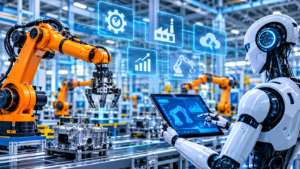
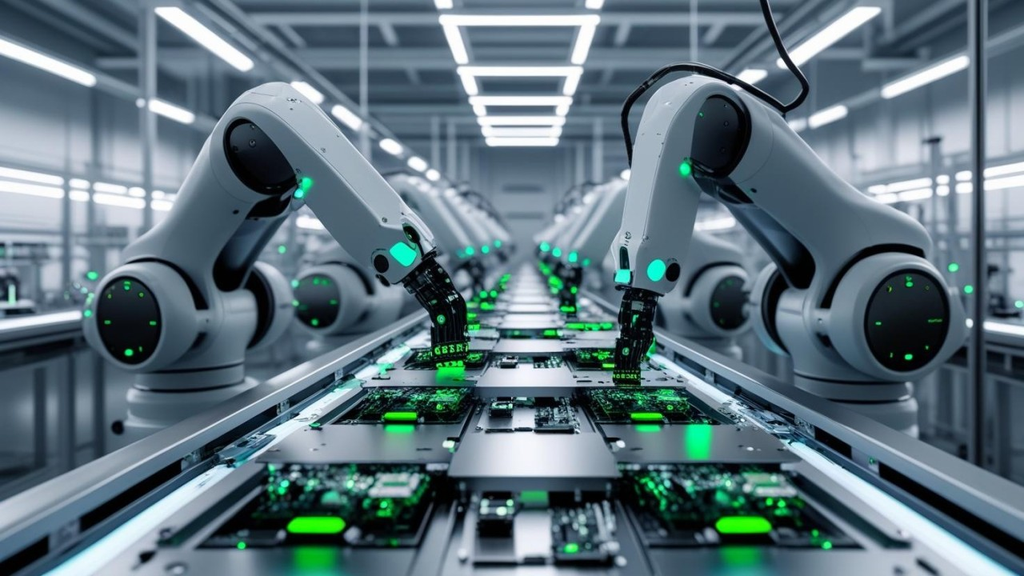
The robots are used in manufacturing industries for repetitive and precision-based tasks. Typical applications for industrial robots include welding, painting, product assembly, product packaging, and quality inspection.
If well maintained and supervised, these machines can run on a continuous basis. They also assist businesses in keeping products consistent and enhancing the speed of production.
Robotic automation cuts down on the number of workers doing aspects of a physically strenuous or repetitive task.
5. Robotics in Agriculture
Robotics presents additional possibilities in agriculture as well. Advanced machines are being used by farmers for carrying out farming and to manage resources effectively.
Agricultural robots can be used to assist in the following areas:
- Planting seeds
- Harvesting crops
- Removing weeds
- Monitoring crop conditions
- Spraying fertilisers and pesticides
Drones and automated farm machinery can also gather data about fields and aid farmers in more informed decision-making.
These technologies can aid in modern farming and enhance productivity.
6. Robotics in Transportation
The transportation sector is affected by robotics and automation. Smart machines are transforming transportation, for instance, through self-driving technology, automated warehouse vehicles, and robotic delivery services.
Autonomous vehicles rely on computer systems, cameras, and sensors for understanding their surroundings and making driving decisions.
While fully autonomous transportation is still on the horizon, robotics is playing a role in making the transportation system safer and more efficient.
What Are the Main Benefits of Robotics?
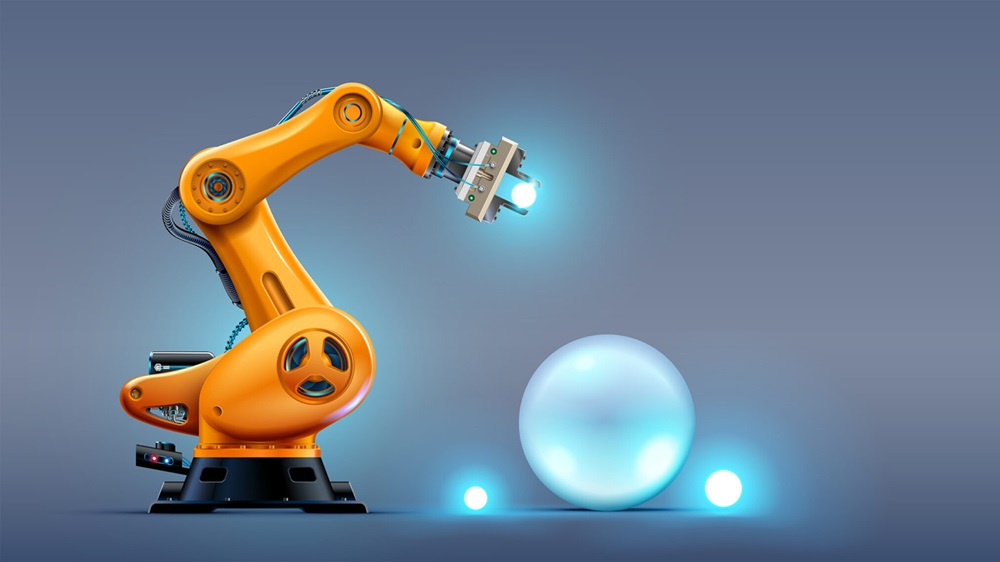
There are several benefits of robotics to individuals, businesses, and industries.
- 1. Saves Time: Robots are able to carry out many repetitive tasks in a short amount of time, which means that people can dedicate their time to other important tasks.
- 2. Increases Accuracy: When properly programmed, the automated machine can perform a particular task with accuracy.
- 3. Boosts Productivity: Robots enable industries to accomplish more work in shorter amounts of time.
- 4. Enhances Safety: Robots can work in hazardous environments where human workers can be threatened.
- 5. Supports Innovation: Robotics promotes the creation of new technologies, products, and services.
The advantages of robotics in modern technological development make it important.
What Are the Challenges of Robotics?
Although robotics has its benefits, there are also some problems associated with it.
The price of advanced robotic systems is a significant issue to be considered, as are their installation and upkeep. It could be challenging for small businesses to handle these costs.
Another problem is job displacement. However, some repetitive positions may be able to be automated, thereby decreasing the need for human workers. It can, however, also generate new career opportunities for robotics engineers, programmers, maintenance, and technical support.
The other crucial point is Cybersecurity. Unless sufficiently protected, connected robotic systems could pose a security threat.
The key areas for responsible use of robotics are safety, employee training, security, and ethical development of technology, both by businesses and governments.
What’s Ahead for Robotics?
The future of robotics is bright with ongoing advancements in technology. Robots are getting smarter and smarter, with the aid of Artificial Intelligence, machine learning, advanced sensors, and computer vision.
Robots could be more prevalent in homes, hospitals, schools, farms, and workplaces in the near future.
More complicated tasks can be performed by humanoid robots, delivery robots, and intelligent industrial robots. But supervised, decision-making, and creative aspects of the human element will still be a vital component.
The development of robots for the future will more likely be based on the idea of working together with humans than on replacing them.
Conclusion
In today’s world, robotics is changing the way we do our daily activities, which makes the overall process faster, easier, and more efficient. Smart machines are revolutionizing industries from medicine to the field of education to manufacturing to agriculture and beyond.
While robotics can be expensive and potentially replace some jobs, its advantages are significant and an important component of technological advances, despite the challenges. The future will include robotics even more, as AI and automation evolve.
Frequently Asked Questions (FAQs)
1. What is robotics in simple words?
Robotics technology is the art of designing, constructing, and programming robots to carry out various tasks either automatically or with human help.
2. How are people impacted by robots in their daily lives?
Smart home devices, medical devices, robotic transport, cleaning robots, and other intelligent machines make everyday life easier by using robotics.
3. What are the five applications of robotics?
The main applications are: healthcare, manufacturing, agriculture, education, and transportation.
4. AI is beneficial to robotics in which way?
AI empowers robots to analyze, interpret, and make decisions based on given instructions and data by processing information, identifying objects, and analyzing their environments.
5. What are the benefits of robotics?
The primary benefits are increased productivity, better accuracy, time savings, greater efficiency, and avoiding dangerous tasks.