Virtual Reality: How Is VR Changing the Digital World?
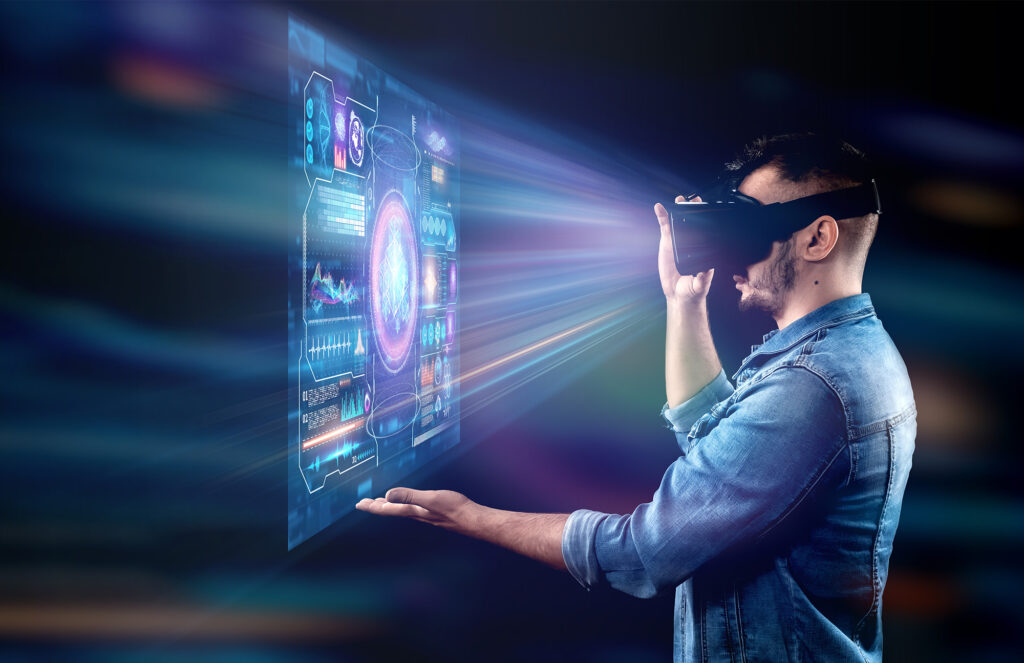
Virtual Reality (VR) is a technology that is changing the digital landscape in ways that are fascinating. It lets people use computer-generated environments that are realistic in appearance and operation. Through the use of VR headsets, controllers, and other equipment, users can experience virtual locations, participate in interactive games, training, or interact with virtual objects.
VR is now gaining traction in various sectors like education, health and human services, gaming, entertainment, real estate, and business. With the advancements of technology, VR is opening up new possibilities for individuals and institutions. With the development of technology, VR is presenting new opportunities for individuals and institutions alike. However, what is virtual reality doing in the digital world? Let’s delve into its capabilities, uses, advantages, and potential future developments.
What is Virtual Reality?
Virtual Reality (VR) is a technology that generates a virtual 3D world from computers and specialized equipment. It makes users feel like they are in a virtual world instead of watching a virtual world.
Typical VR systems comprise a head-mounted display (HMD), motion sensors, and controllers for offering interactive experiences. Users can navigate and explore virtual environments and interact with objects.
For instance, one can tour a virtual museum, attend a virtual classroom, or enjoy a video game scene all without leaving home.
How Does Virtual Reality Work?
Virtual reality is the technology that blends hardware and software to provide an immersive digital experience.
Here are some of the key elements:
- VR Headsets: These are items that create a digital world and are placed in front of the user’s eyes.
- Motion Sensors: They monitor head and body movements for increased realism.
- Controllers: Handheld devices with which users can interact with virtual objects.
- VR Software: These are developed applications that provide virtual environments and interactive experiences.
- 3D Sound: Makes the user feel more linked to the virtual surroundings.
The system reacts in real time when the user moves their head and/or hands. This effect makes the user feel as if they are in the virtual environment.
How Is Virtual Reality Changing the Digital World?
VR is transforming the way people learn, work, communicate, and enjoy entertainment. Let’s take a look at some of the key applications that this technology is having on several industries.
1. Transforming the Gaming Industry
Among the most popular virtual reality applications is gaming. Traditional video games feature screens and controllers, while VR games immerse players in digital environments from their own perspective.
Players can travel in virtual worlds, interact with characters, and engage in realistic activities. VR technology enhances the level of engagement and interaction in games.
2. Improved education and learning
Virtual reality is transforming education into a more interactive and hands-on experience. Students will be able to visit historic sites, learn about scientific concepts, and perform virtual experiments.
For instance, science students can learn about the human body using 3D models, and history students can virtually visit ancient civilisations.
Complicated subjects can be easier to understand and remember through VR-based learning.
3. Assisting in Healthcare and Medical Training
The healthcare industry is another sector that is taking advantage of virtual reality. VR simulations provide medical students and healthcare professionals with hands-on practice in a digital environment.
It can also be used with some rehabilitation regimens, pain management strategies, and mental health therapies when supervised by a professional.
Healthcare professionals can acquire hands-on experience without endangering real patients through virtual training.
4. The changing nature of work and business.
Companies are using virtual reality for employee training, product demonstrations, collaboration, and meetings.
Staff are able to join virtual meetings and engage with digital presentations. Businesses can also develop training scenarios to assist workers in comprehending how to proceed in the workplace.
This technology could enhance the interaction of some remote working experiences.
5. Revolutionizing Real Estate and Tourism
Virtual reality is being used to enable people to ‘visit’ their house, their office, or the tourist sites they wish to visit without having to leave their homes.
Real estate firms can provide virtual property visits, so as a potential customer, you are able to look at the rooms, layouts, and interior designs.
Likewise, travel companies can offer virtual tourism for places to visit, hotels, and attractions. This assists customers in making informed choices prior to making trips.
What Are the Main Benefits of Virtual Reality?
There are multiple benefits to virtual reality for businesses, individuals, and educational institutions.
This has the following advantages:
- Immersive Experiences: Users can engage with a realistic digital environment.
- Better Learning: VR enhances educational material with more engaging and practical content.
- Safe Training: Individuals may engage in some activities in a simulated environment.
- Cost Savings: Travel and equipment costs may be saved, as well as virtual demonstrations and training.
- Improved Visualization: Businesses can create 3D product and design presentations.
- Remote Collaboration: Teams can discover more interactive ways of communication and collaboration.
VR is helpful in numerous sectors due to these advantages.
What Are the Challenges of Virtual Reality?
Though the pros outweigh the cons, there are still some limitations to virtual reality.
The price of VR devices is one obstacle. Some users may find it costly to get high-quality headsets and compatible computers.
Still another is motion sickness. Some people may suffer from dizziness, eye strain, or discomfort after lengthy VR experiences.
Another concern is privacy and data security, as VR headsets can track users’ movements and interactions, which can raise privacy concerns.
Also, many industries lack the right VR software or experienced personnel. Making them more affordable, accessible, and comfortable will be key for greater uptake.
What Is the Future of Virtual Reality?
As hardware and software continue to come to fruition, the future of virtual reality is promising. More comfortable and accessible VR experiences could be made possible by better displays, improved motion tracking, lighter headsets, and more realistic virtual environments.
AI’s potential to enhance virtual characters, tailored learning experiences, and immersive digital surroundings could also be applicable to other fields.
VR may become more prevalent in the future for use in education, healthcare, entertainment, business, and online collaboration.
But its development will rely on affordability, applications, user experiences, and responsible technology development.
Conclusion
VR is revolutionizing the digital world by bringing to life new modes of entertainment, education, healthcare, business, and travel. It enables users to engage with simulated environments and experience scenarios that can be inaccessible or unfeasible in the real world.
While there are still hurdles to cross, including the cost of equipment, motion sensitivity, and privacy issues, technology is evolving rapidly and offers promising opportunities. VR is expected to be a big part of the future of digital experiences.
Frequently Asked Questions (FAQs)
1. In simple words, what is Virtual Reality?
Virtual reality, a technology that uses computer-generated environments, in which users interact with digital objects and experience simulated environments using special devices.
2. What are the VR devices?
Headsets, motion controllers, tracking sensors, and compatible computers and audio equipment are common VR devices.
3. Where is Virtual reality being applied in real life?
VR is employed in games, education, virtual property tours, employee training, healthcare applications, and interactive entertainment.
4. What are the key advantages of using virtual reality?
The advantages are immersive experience, interactive learning, safe training, enhanced visualization, and improved remote collaboration.
5. Differentiate between virtual reality and augmented reality.
Virtual reality is a fully created digital world, and augmented reality is a digital addition to the real world.
6. Will virtual reality be the next big thing in technology?
VR is rapidly gaining traction within the field of education, healthcare, gaming, business, and communication, thanks to the increasing affordability and ease of use of VR devices.