Audiodisplayed Meaning: What Does This Term Mean in Digital Communication?
Within the digital realm, individuals constantly encounter novel vocabulary and specialized terminology across websites, messaging applications, and social media platforms.
Among these terms is Audio, a concept that often prompts users to seek clarification regarding its definition and its role within modern digital communication.
The term “Audiodisplayed Meaning” typically denotes audio material rendered visually upon a digital interface. This encompassing category may incorporate voice messages, musical tracks, recorded media, or audio players facilitating user access to auditory content. The precise definition often fluctuates contingent upon the specific platform or contextual environment where the term manifests.
What Is the Meaning of Audiodisplayed?
The term “Audiodisplayed Meaning” is a compound of two distinct concepts: “Audio” and “Displayed.” Audio denotes sound, encompassing music, voice recordings, and spoken messages, whereas Displayed signifies something that is presented or shown on a screen.
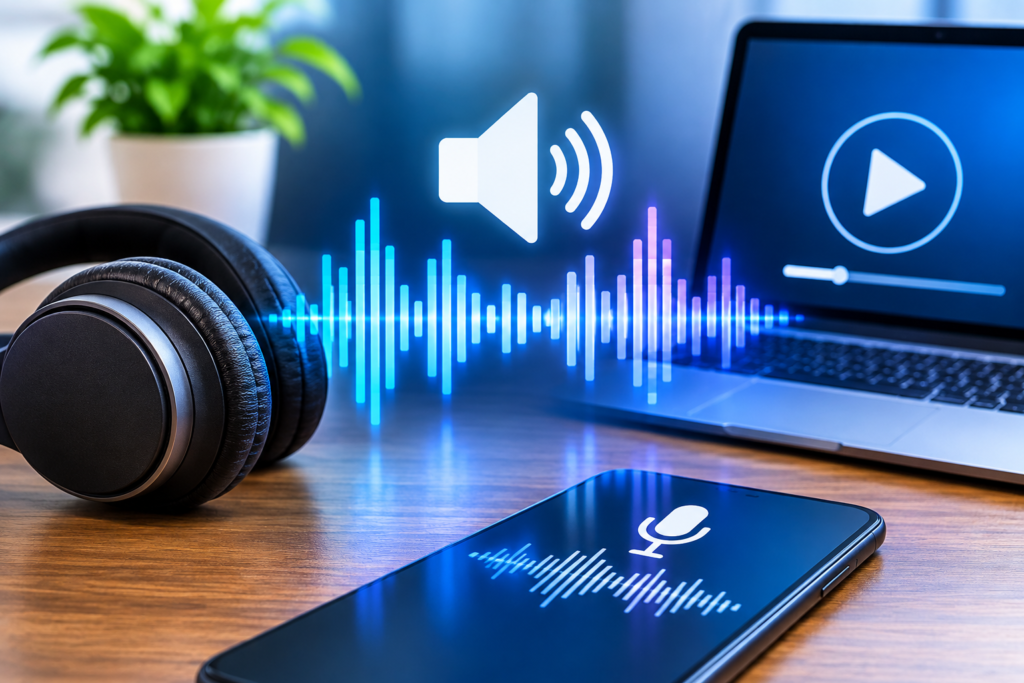
Collectively, the term “Audio” encompasses the presentation of auditory content within digital interfaces; for instance, when a voice message is received complete with a play button and progress bar, the audio is rendered visually on the screen.
It is important to understand that Audiodisplayed is not a universally standardized technical term. Its specific meaning may vary depending on where it is used.
How Is Audiodisplayed Used in Digital Communication?
Audio has emerged as a pivotal component of digital discourse, as individuals leverage a diverse array of platforms to disseminate recordings, curate musical experiences, and transmit voice messages.
Some common uses include:
1. Displaying Voice Messages
Messaging platforms integrate voice messages equipped with playback controls, empowering users to manipulate recordings by playing, pausing, or replaying them at their discretion.
2. Showing Audio Files
Web-based platforms and software applications facilitate the delivery of audio content via integrated playback interfaces, encompassing a diverse array of materials such as interviews, instructional recordings, public announcements, and musical compositions.
3. Supporting Online Learning
Educational platforms host recorded lectures, tutorials, and language courses, enabling learners to acquire knowledge through auditory engagement.
4. Presenting Podcasts
Podcast interfaces present episodes complete with titles, playback controls, and progress metrics, thereby enabling listeners to readily access the Audio content.
What Are the Main Features of Audio Display?
The Audio presentation encompasses a range of functionalities that significantly enhance the digital user experience.
- Easy Playback: Users can listen to audio directly through websites and applications.
- Playback Controls: Play, pause, and volume controls make listening convenient.
- Progress Indicators: Audio players show how much of a recording has been played.
- Device Compatibility: Audio content can be accessed through smartphones, tablets, and computers.
- Accessibility: Audio combined with captions and transcripts makes information more accessible.
Why Is Audio Important in Modern Technology?
The integration of audio displayed meaning elements significantly enhances the interactivity and user convenience of digital platforms.
1. Improves Communication
Voice messages facilitate the natural dissemination of information, sparing individuals the burden of composing extensive text-based communications.
2. Saves Time
Users may choose to consume information through audio channels while multitasking, thereby eliminating the need to engage with lengthy written documents.
3. Enhances User Experience
The conspicuous placement of Audio players facilitates the effortless discovery and access of recordings for visitors.
4. Supports Education
Learners have unrestricted access to recorded lessons, lectures, and tutorials at any time that suits their needs.
What Challenges Can Occur When Displaying Audio?
While the audio format offers distinct advantages, it can simultaneously give rise to specific challenges for users.
- Loading Issues: Large audio files may take longer to load.
- Compatibility Problems: Some formats may not work on every device or browser.
- Privacy Concerns: Voice recordings may contain personal information.
- Accessibility Limitations: Audio without captions or transcripts may be difficult for some users to access.
- Technical Errors: Broken links and playback problems can interrupt listening.
Leveraging trusted platforms, deploying up-to-date applications, and utilizing compatible audio formats can effectively mitigate these issues.
Conclusion
The term “Audiodisplayed Meaning” typically denotes auditory content rendered visually via digital interfaces, encompassing formats such as voice messages, music playback, podcasts, and recorded lectures. While no single, universally codified technical definition exists for this concept, grasping its conventional application facilitates greater user proficiency with contemporary digital communication paradigms. As technological capabilities advance, the visual representation of audio will invariably continue to underpin online education, entertainment, and daily interpersonal exchange.
Frequently Asked Questions (FAQs)
1. What does Audiodisplayed mean?
The term “Audio” typically denotes audio content rendered on a digital interface, enabling users to access or play back the material.
2. Is Audiodisplayed a technical term?
It lacks universal standardization as a technical term; its definition is contingent upon the specific context in which it is employed.
3. Where is Audiodisplayed commonly used?
This concept applies to audio presentations across a diverse spectrum of digital environments, including messaging applications, music streaming platforms, podcasting websites, and educational portals.
4. What is an example of Audiodisplayed?
The ubiquitous presence of voice messages, typically manifested within messaging platforms as an interactive element complete with a play button and a progress indicator, serves as a quintessential illustration of this phenomenon.
5. Does Audiodisplayed mean an audio file has been played?
The mere display of audio does not signify that it has been audibly received; rather, it indicates only that the sound has been rendered visually on the screen, without implying actual playback or human consumption.
6. Can Audiodisplayed work on mobile devices?
Indeed, audio content is rendered visible on smartphones and tablets via compatible websites and applications.
To elucidate the specific context in which the term operates and to eliminate redundant elaborations.